

Chiropractor or Orthopedic Doctor: Which Fits?
- Ron Carter

- 3 days ago
- 5 min read
A painful back after lifting, a shoulder that will not settle down after a fall, or knee pain that makes stairs difficult can leave you asking the same question: should you see a chiropractor or orthopedic doctor? The right answer depends on what happened, how severe your symptoms are, and what your body needs to heal safely.
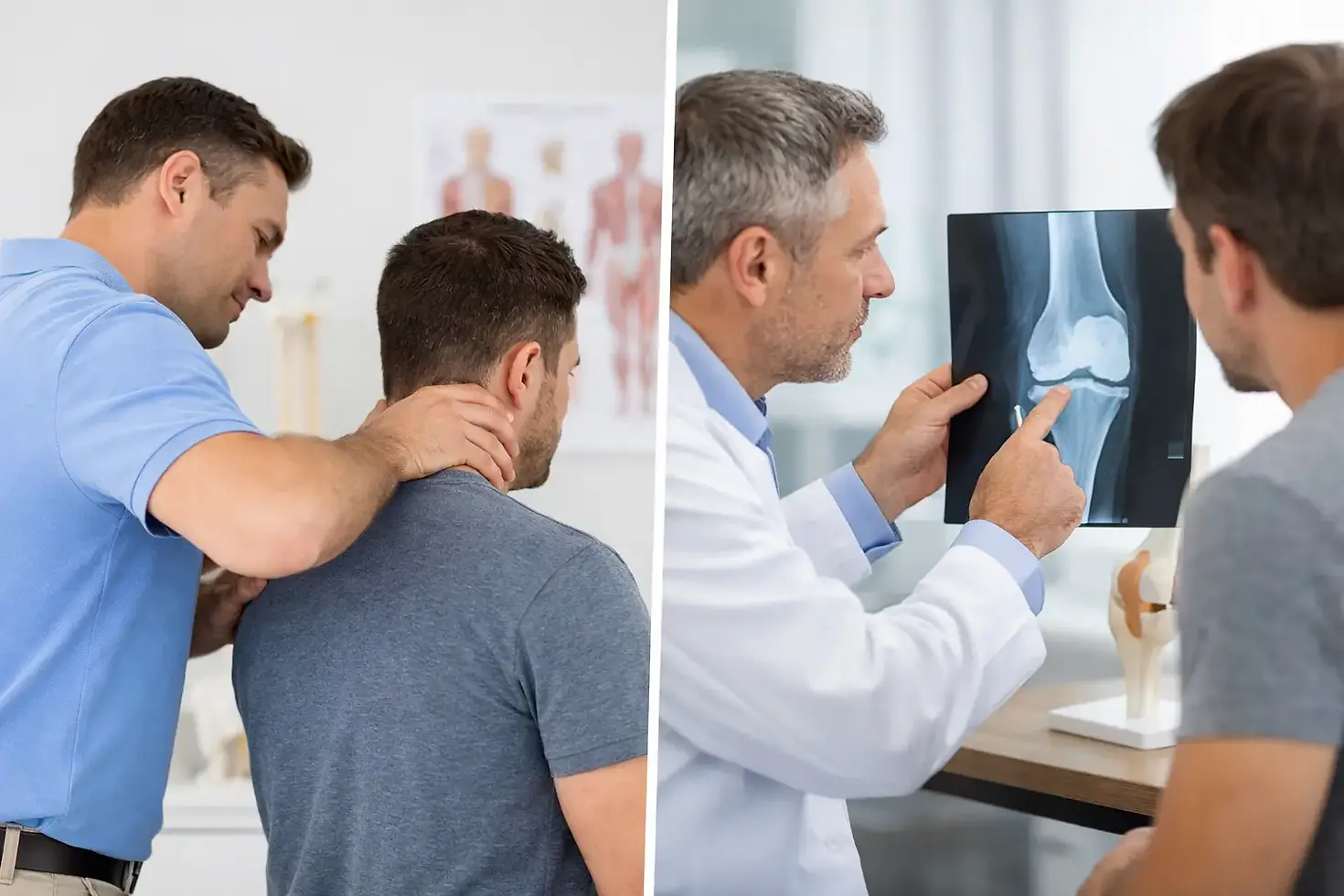
Both providers work with musculoskeletal problems, but they approach care from different clinical perspectives. A chiropractor often focuses on conservative, hands-on treatment for the spine, joints, muscles, and movement patterns. An orthopedic doctor is a medical physician who diagnoses and treats bone, joint, tendon, ligament, and muscle conditions, including cases that may require medication, imaging, procedures, or surgery.
For many people, the best first step is not about choosing the “better” provider. It is about choosing the provider whose training and treatment options match the injury in front of you.
Chiropractor or Orthopedic Doctor: Start With the Injury
A chiropractor may be an appropriate starting point when pain appears connected to movement, posture, muscle tension, joint restriction, repetitive strain, or a non-surgical injury. Common concerns include low back pain, neck stiffness, headaches associated with neck tension, sciatica-like symptoms, minor sprains and strains, and mobility limitations that interfere with work, exercise, or daily life.
Chiropractic care is not limited to spinal adjustments. A complete musculoskeletal evaluation should also consider the condition of the surrounding muscles, joints, tendons, and ligaments. For example, low back pain may be worsened by restricted hip movement, weak or overworked gluteal muscles, a strained ligament, or protective muscle guarding after an injury. Treating only the painful spot may not address why the problem continues.
An orthopedic doctor may be the better first call when there is concern for a fracture, a significant tear, a dislocation, severe arthritis, an infection, or another condition requiring medical or surgical evaluation. Orthopedists commonly manage issues such as broken bones, severe rotator cuff tears, advanced joint degeneration, torn ligaments, and injuries that may need injections or surgical repair.
The line is not always sharp. A person with knee pain may need conservative care and rehabilitation, while another person with a sudden swollen knee after a sports injury may need prompt imaging and orthopedic assessment. The mechanism of injury, symptoms, and exam findings matter more than the name of the body part that hurts.
When Conservative Chiropractic Care May Make Sense
Conservative treatment is often a reasonable option for people whose symptoms are painful but stable, especially when they want to improve movement and function before considering more invasive measures. This can include people recovering from an auto accident, workers with repetitive lifting demands, active adults with overuse injuries, and individuals whose pain has gradually built over time.
A chiropractor can evaluate how your injury affects the way your body moves as a whole. Care may include hands-on joint treatment, muscle therapy, soft-tissue techniques, therapeutic exercise guidance, activity modifications, and other modalities selected for the stage of healing. The goal is not simply to create a short period of relief. It is to support better movement while protecting tissues that are still recovering.
Healing also changes over time. During the acute inflammatory phase, treatment may focus on reducing irritation, protecting the injured area, and maintaining gentle movement where appropriate. During repair, when collagen is forming, the body benefits from carefully graded loading rather than either complete inactivity or a quick return to strenuous activity. In the remodeling phase, treatment can focus more on strength, mobility, coordination, and restoring confidence in everyday movement.
This structured approach is especially helpful when pain involves more than one tissue type. A neck injury after a car accident, for instance, may involve joint irritation, strained muscles, limited range of motion, and movement patterns that develop because the body is guarding against pain.
At Chiropractic and Muscle Therapy of Delaware, care is built around this whole-body view, with treatment tailored to the injury and the patient’s stage of recovery.
When an Orthopedic Evaluation Should Come First
Some symptoms should not wait for conservative musculoskeletal care. If you have an obvious deformity after an injury, cannot bear weight, have severe swelling, or suspect a broken bone or dislocation, seek urgent medical evaluation. The same applies to a deep wound, a hot and swollen joint with fever, or severe pain that rapidly worsens.
You should also contact a medical provider promptly for numbness in the groin area, new loss of bladder or bowel control, progressive weakness in an arm or leg, or significant balance problems. These symptoms can indicate a serious neurologic condition and need urgent attention.
An orthopedic consultation may be appropriate when pain persists despite a well-managed course of conservative care, when an injury causes major loss of function, or when advanced imaging is likely to change the treatment plan. For example, a shoulder that remains weak after a traumatic fall or a knee that repeatedly locks may need a more detailed medical workup.
Seeing an orthopedic doctor does not automatically mean surgery. Orthopedists also recommend non-surgical options, including physical therapy, bracing, medication, activity changes, and injections when clinically appropriate. Their role is to determine the diagnosis and help you understand the full range of medical and surgical options.
What Each Provider Can Offer
The practical difference often comes down to treatment emphasis. Chiropractors commonly provide hands-on care and functional treatment for mechanical pain and movement-related conditions. Orthopedic doctors provide medical diagnosis and management for injuries or diseases that may require more extensive testing, medication, injections, or surgery.
Imaging is another area where expectations can differ. An X-ray, MRI, or CT scan can be valuable when it helps answer a specific clinical question, such as whether a bone is broken or a tendon is significantly torn. But imaging is not always needed immediately for uncomplicated back, neck, or muscle pain. Findings on scans do not always explain symptoms, particularly as people age. A careful history and physical exam remain central to making good treatment decisions.
The most effective care is often coordinated rather than competitive. A patient may see an orthopedic doctor to rule out a serious structural injury and then receive conservative care to improve mobility, ease muscular dysfunction, and build strength. Another patient may begin with chiropractic care and be referred for orthopedic evaluation if symptoms, examination findings, or recovery progress suggest a need for additional testing.
Questions to Ask Before You Choose
Before scheduling, think about the details of your symptoms. Did the pain begin suddenly after trauma, or did it develop gradually? Is it improving, stable, or getting worse? Can you perform basic tasks such as walking, sleeping, working, reaching, or getting in and out of a chair?
It also helps to ask a provider how they evaluate the full injury, what treatment options they recommend, how they will measure progress, and when they would refer you to another specialist. A trustworthy provider should be comfortable explaining both the expected benefits and the limits of care.
Be cautious of anyone who promises a guaranteed cure, recommends the same plan for every patient, or discourages you from seeking medical evaluation when your symptoms warrant it. Good musculoskeletal care is individualized. It respects the diagnosis, your health history, your work and activity demands, and the way your symptoms respond over time.
Choosing Care That Supports Real Recovery
When deciding between a chiropractor or orthopedic doctor, focus on the level of injury and the type of help you need now. Serious trauma, suspected fractures, major tears, severe neurologic symptoms, and conditions that may require surgery call for medical evaluation. Stable pain, stiffness, muscle dysfunction, movement restrictions, and many non-surgical injuries may respond well to conservative chiropractic and muscle-focused care.
You do not have to ignore pain until it becomes severe, and you do not have to assume that every painful condition needs an invasive solution. A clear evaluation and a treatment plan that follows your body’s healing process can give you a more confident path back to work, activity, and the routines that matter to you.



Comments